
Does Therapy in Your Native Language Really Make a Difference?
Paulina Gonzales, LCSW, Director of Virtual Outpatient at Mainspring Recovery, explains IOP vs residential rehab and how to choose the right program.
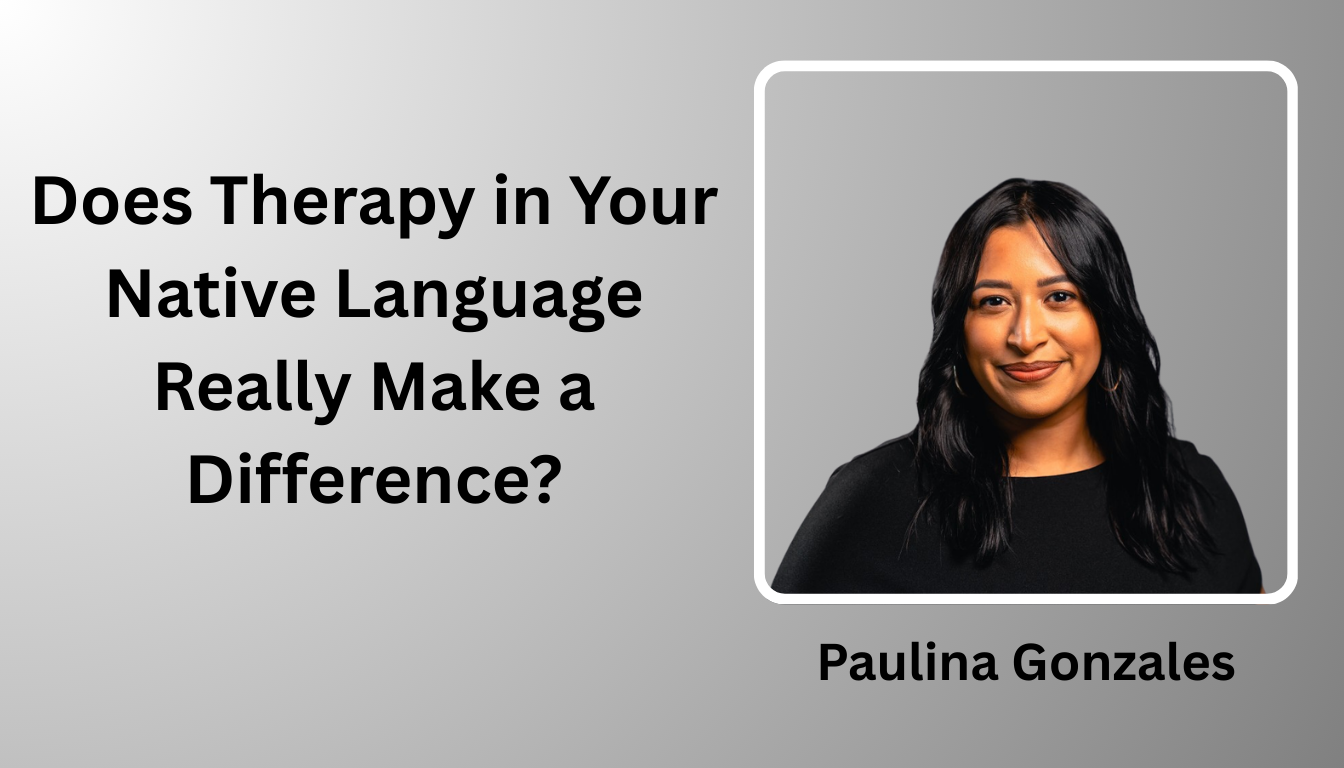
Insights from Our Bilingual IOP Director
As a bilingual clinician who speaks both Spanish and English, I’ve often asked myself a simple question:
Does it truly make a difference to provide therapy in someone’s native language, even if they understand English?
Over time, both research and clinical experience have shown that the answer is yes. And the reason has less to do with vocabulary and more to do with emotion.
Why Language Affects Emotional Processing
Research shows that people tend to access deeper emotional content in their first language. Our earliest memories like comfort, fear, attachment, shame, and love are usually formed and stored in the language we grew up speaking.
Because of this, emotional processing is often more immediate and authentic in a person’s primary language (Pavlenko, 2012; Dewaele, 2004).
When therapy takes place in a second language, clients may still understand the conversation. However, the emotional intensity can feel muted or more difficult to access. There can be a subtle distance between describing an experience and truly feeling it.
What Research Shows About Bilingual Emotional Expression
Studies on bilingual emotional expression have found that individuals report:
- Stronger emotional reactions
- Greater emotional resonance
- More vivid memories
when using their native language compared to a later-learned one (Harris, Ayçiçeği, & Gleason, 2003).
In clinical settings, this difference can matter. It may be the distinction between describing a problem intellectually and processing it on an emotional level.
Why This Matters in Addiction and Trauma Recovery
In recovery, this distinction becomes especially important.
Substance use, trauma, grief, and relational wounds are deeply emotional experiences. If the language of treatment feels foreign, the healing process can feel just as distant.
Language is not just a communication tool. It is an emotional bridge.
When clients are able to speak in the language that holds their memories, family stories, and cultural identity, something shifts. Words come more naturally. Feelings become clearer. The therapy space begins to feel safer, more familiar, and more honest.
Research on culturally and linguistically responsive care shows that language-congruent services improve engagement, retention, and overall treatment outcomes (Alegría et al., 2010).
For individuals navigating early recovery, engagement and retention are critical to long-term stability.
The Bilingual IOP at Mainspring Recovery
This understanding is the intention behind the bilingual Intensive Outpatient Program (IOP) at Mainspring Recovery.
The program was designed to reduce language barriers and create a space where clients can engage in treatment without having to translate their thoughts or filter their emotions.
Therapy happens in the language that feels natural, supported by culturally informed practices and real-world relevance. In a culturally responsive group setting, clients are not just learning coping skills. They are connecting those skills to their real lives, their families, and their communities.
At Mainspring Recovery, our goal is to ensure that clients feel understood, not only intellectually, but emotionally and culturally.
Language Is One Part of Good Clinical Care
At the same time, strong clinical care requires recognizing that language is only one component of assessment and treatment planning.
Treatment must always be based on:
- Individual clinical needs
- Level of care appropriateness
- Safety considerations
- Co-occurring mental health conditions
The goal is not simply to offer services in another language. It is to provide meaningful, effective care that meets individuals where they are.
When treatment honors both language and lived experience, trust grows. Engagement improves. Recovery becomes more sustainable.
When care respects a person’s voice, identity, and story, therapy becomes more than accessible. It becomes a place where real healing can happen.
Paulina Gonzales, LCSW
Director of Virtual Outpatient
Mainspring Recovery
References
Alegría, M., Atkins, M., Farmer, E., Slaton, E., & Stelk, W. (2010). One size does not fit all: Taking diversity, culture, and context seriously. Administration and Policy in Mental Health and Mental Health Services Research, 37(1–2), 48–60.
Dewaele, J.-M. (2004). The emotional force of swearwords and taboo words in the speech of multilinguals. Journal of Multilingual and Multicultural Development, 25(2–3), 204–222.
Harris, C. L., Ayçiçeği, A., & Gleason, J. B. (2003). Taboo words and reprimands elicit greater autonomic reactivity in a first language than in a second language. Applied Psycholinguistics, 24(4), 561–579.
Pavlenko, A. (2012). Affective processing in bilingual speakers: Disembodied cognition? International Journal of Psychology, 47(6), 405–428.
Related articles
.png)
Addiction and the Brain: A Guide to Dopamine, Cues, Cravings, and What Helps
.png)
Signs You Need Alcohol Addiction Treatment And What to Do Next
.png)
How Cognitive Behavioral Therapy Helps in Alcohol Recovery
.png)
Alcohol Detox vs. Rehab: What’s the Difference?

How to Choose the Right Drug Rehab Center for You
.png)
Explaining Addiction to Children: Age-appropriate Strategies that Work
Welcome to Mainspring Recovery, The #1 Rehab Center in Virginia
You don’t have to walk the road to recovery alone. At Mainspring Recovery, we know how important it is to have a trusted partner while you leave drugs and alcohol behind. Find a brighter tomorrow by starting with our compassionate team of medical professionals and recovery specialists today at our rehab center in Virginia.
Call: 571-583-5115
Fax: 571-749-9420
Email: admissions@mainspringrecovery.com
Emailfor all records requests: medicalrecordsdumfries@mainspringrecovery.com
